
Slow Fashion is a project that explores alternatives to the fast fashion industry, which has a massive impact on sustainability: from the extraction of raw materials, the polluting production processes, the (virtually nonexistent) labor rights of textile industry workers, the rapid obsolescence of garments due to changing fashions and/or their low quality and deterioration, to imperialist models of factory relocation… There are many factors that compel us to reevaluate our relationship with clothing if we want to make progress toward responsible production and consumption (SDG 12). Not all of these factors are directly within our control as consumers, but there are several areas where our contribution is direct and significant. Committing to a model of repair and design that incorporates recycled textiles allows us to begin breaking this cycle, as does the consumption of secondhand clothing.
This project is being carried out in collaboration with the MUCAM Student Association—the University Movement for Awareness and Activism in Fashion
Upcoming Events
1C – Organization of the Fall 2024 CLOTHING SWAP
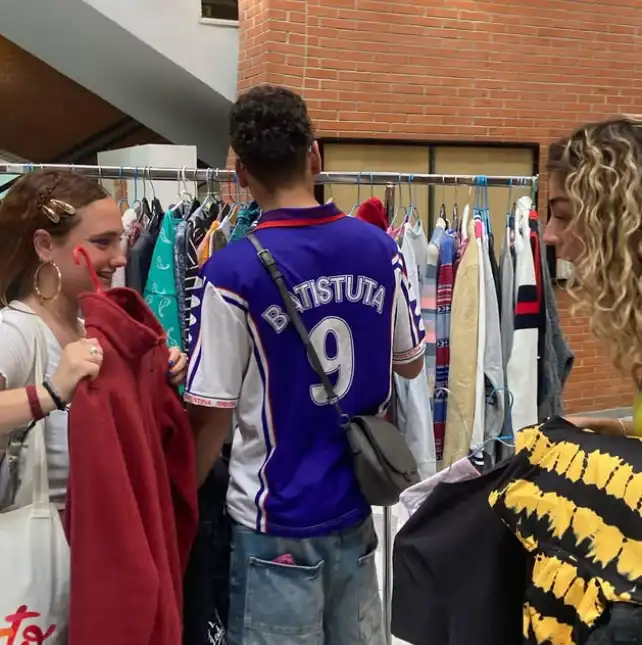
Learn how to set up all the necessary aspects of organizing a college clothing swap, from educational and advocacy content about the textile industry to logistics and volunteer coordination.
- Location: Carlos III University of Madrid. Hall, Building 14 (Getafe Campus)
- Date: October 28 through November 21, 2024.
- Intended for: Alumni, Students, Faculty and Staff, Administrative and Support Staff, General Public (8 spots)
It is important to explore alternatives outside the fast fashion industry, which has a massive impact on sustainability: from the extraction of raw materials, the polluting production processes, the (virtually nonexistent) labor rights of textile workers, the rapid obsolescence of garments due to changing fashions and/or their low quality and wear and tear, to imperialist models of factory relocation… There are many factors that compel us to reevaluate our relationship with clothing if we want to make progress toward responsible production and consumption (SDG 12). Not all of these factors are directly within our control as consumers, but there are several areas where our contribution is direct and significant. Committing to a model of repair and design that incorporates textile recycling allows us to begin breaking this cycle, as does the consumption of secondhand clothing.
College clothing swaps offer an alternative to buying new clothes produced under the fast fashion model. UC3M (thanks to the student association MUCAM—the university movement for fashion awareness and activism) has been organizing two clothing swaps a year—one in the spring-summer and another in the fall-winter—for the past three years, to offer a real option for circular and responsible consumption.
The work schedule consists of weekly 2-hour meetings (total: 6 hours), preparation the day before the exchange (2.5 hours), being present on the day of the exchange (7 hours), and the day after to handle post-production and donate any surplus (2 hours).
Price: Free
Capacity: 8 seats
Registration and credit recognition through the“ ” “Pasaporte Implícate.”
To register, you must be selected through a preliminary interview with the MUCAM group and the UC3M Culture Department, which will make their selection based on the participants’ commitment and interest. To do so, please send an email to alfredo.miralles@uc3m.es
We are MUCAM, a University Movement for Awareness and Activism in Fashion made up of 25 students from different universities in the Community of Madrid. We’ve been learning, researching, and reflecting on the social and environmental impact of the textile industry for some time now, and we want to take action!
What inspires us?
People: On April 24, 2013, the Rana Plaza building in Bangladesh collapsed, killing 1,138 people and injuring another 2,500 while they were working for brands found in every closet.
The collapse of the Rana Plaza, one of the worst industrial disasters in history, brought to light the precarious working conditions in the sector. Since then, the Fashion Revolution movement has been calling for transparency throughout the entire textile supply chain, fighting for living wages and the use of sustainable materials.
The Planet: The textile industry is responsible for 10% of CO2 emissions. Three years ago, the UN turned its attention to the rapid and continuous production of inexpensive clothing (fast fashion), labeling the sector an environmental emergency and highlighting its contribution to the climate crisis, given its negative environmental impacts associated with the production, distribution, and management of textile waste.
We all buy clothes because clothing is a basic necessity, but as young people, we also play a key role in setting trends. That’s why we want to take a stand—not to sell, but to turn this reality on its head—by joining the international Fashion Revolution movement:
What do we propose?
To promote a shift in young people’s clothing consumption habits by organizing clothing swap events on college campuses.
Call on brands in the apparel industry to make a serious commitment to ensuring that everyone in their supply chains receives a living wage, through the #GoodClothesFairPay campaign, a European Citizens’ Initiative (ECI).
1C – Slow Fashion Workshop: DIY
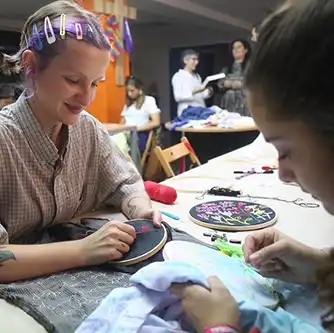
A workshop on how to customize your clothes using DIY techniques. Give your old clothes a new look by personalizing them and giving them a second chance!
- Location: Carlos III University of Madrid. Classroom 16.S.01 (Getafe Campus)
- Date: November 7 , from 11:30 a.m. to 2:00 p.m.
- Intended for: Alumni, Students, Faculty and Staff, Administrative and Support Staff, General Public (15 spots)
It is important to explore alternatives outside the fast fashion industry, which has a huge impact on sustainability: from the extraction of raw materials, the polluting production processes, the (virtually nonexistent) labor rights of textile workers, the rapid obsolescence of garments due to changing fashions and/or their low quality and deterioration, to imperialist models of factory offshoring… There are many factors that compel us to reevaluate our relationship with clothing if we want to make progress toward responsible production and consumption (SDG 12). Not all of these factors are directly within our control as consumers, but there are several areas where our contribution is direct and significant. Committing to a model of repair and design that incorporates textile recycling allows us to begin breaking this cycle.
Furthermore, customizing clothing makes it possible to express personal identity outside the realm of mass-produced aesthetics. Identity is a much more complex construct, and people’s bodies do not necessarily conform to mainstream fashions and tastes. Customize your clothes to turn them into unique pieces that serve as an outward reflection of who you are—a way to present yourself to the world and express yourself through fashion.
In this workshop, the MUCAM collective—the university movement for fashion awareness and activism—will guide you through three DIY textile upcycling techniques: stenciling with fabric paint, patches, and buttons.
Price: Free
Materials: We’ll have basic materials available in the workshop (needles, thread, embroidery hoops, fabric paint, stencils, craft knives, scissors, buttons, recycled clothing…), but you must bring the garment you’d like to customize. If you don’t want to customize any clothing but would like to come to learn and help other students, you’re also welcome.
Seats: 15 seats.
Registration and credit recognition through the“ ” “Pasaporte Implícate.”
We are MUCAM, a University Movement for Awareness and Activism in Fashion made up of 25 students from different universities in the Community of Madrid. We’ve been learning, researching, and reflecting on the social and environmental impact of the textile industry for some time now, and we want to take action!
What inspires us?
People: On April 24, 2013, the Rana Plaza building in Bangladesh collapsed, killing 1,138 people and injuring another 2,500 while they were working for brands found in every closet.
The collapse of the Rana Plaza, one of the worst industrial disasters in history, brought to light the precarious working conditions in the sector. Since then, the Fashion Revolution movement has been calling for transparency throughout the entire textile supply chain, fighting for living wages and the use of sustainable materials.
The Planet: The textile industry is responsible for 10% of CO2 emissions. Three years ago, the UN turned its attention to the rapid and continuous production of inexpensive clothing (fast fashion), labeling the sector an environmental emergency and highlighting its contribution to the climate crisis, given its negative environmental impacts associated with the production, distribution, and management of textile waste.
We all buy clothes because clothing is a basic necessity, but as young people, we also play a key role in setting trends. That’s why we want to take a stand—not to sell, but to turn this reality on its head—by joining the international Fashion Revolution movement:
What do we propose?
To promote a shift in young people’s clothing consumption habits by organizing clothing swap events on college campuses.
Call on brands in the apparel industry to make a serious commitment to ensuring that everyone in their supply chains receives a living wage, through the #GoodClothesFairPay campaign, a European Citizens’ Initiative (ECI).